In the fast-paced world of RF technology, portability and performance were once considered mutually exclusive. Historically, if you wanted high-end spectrum analysis, you needed a benchtop unit that was as heavy as it was expensive. However, a little over a decade ago, a shift began to occur. Signal Hound entered the scene with a vision to put professional-grade RF tools directly into the hands of engineers via USB-powered devices.
In a recent episode of Signal Hounds: Talking RF, Justin Crooks, a veteran with over twenty years at the company, took viewers on a “stroll down memory lane.” By looking at the original manufacturing stencils and early prototypes, we can trace the evolution of the modern USB spectrum analyzer. From the early days of the SA44B to the powerhouse SM200, here is the story of how Signal Hound redefined the price-performance ratio in the RF industry.
The Foundations: SA44B and the Rise of the Price-Performance Leader
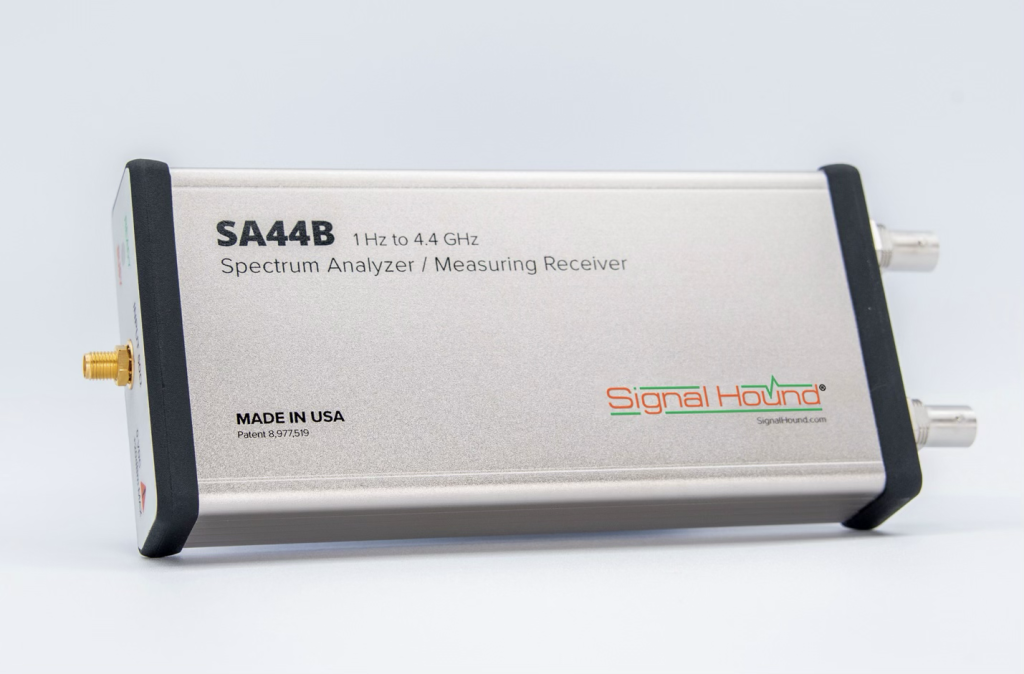
Every legacy has a starting point, and for Signal Hound, that was the SA44B. This 4.4 GHz spectrum analyzer was the product that put the company on the map. At the time of its release, the industry was dominated by massive, costly hardware. The SA44B challenged this status quo by offering a compact, USB-powered alternative that didn’t sacrifice essential functionality.
According to Justin Crooks, the SA44B is what earned Signal Hound its reputation as the price-performance leader. It proved that engineers didn’t need a massive budget to perform accurate frequency measurements. The success of this device paved the way for the Spike software, which transformed any standard laptop into a sophisticated spectrum analysis workstation.
Expanding into Scalar Network Analysis
As the SA44B gained traction, the engineering community began asking for more. Specifically, they needed a way to measure how filters, attenuators, and other components performed across a range of frequencies. This led to the development of the TG44A, Signal Hound’s first tracking generator.
By pairing the SA44B with the TG44A, users could perform scalar network analysis. This was a significant milestone because it provided a low-cost solution for characterizing components, a task that previously required much more expensive equipment. This modular approach—adding specialized hardware to expand capabilities—became a hallmark of the Signal Hound philosophy.
Breaking the Bandwidth Barrier: The BB60 Series
Around 2013, the RF landscape began to change rapidly. Wireless standards were evolving, and engineers needed more than just a simple sweep; they needed to see signals in real-time. This demand birthed the BB60A, Signal Hound’s first foray into wideband spectrum analyzers.
The BB60A was a “really big deal” for its time, featuring over 20 MHz of instantaneous bandwidth. It was one of the first USB-based analyzers to offer any appreciable bandwidth, and more importantly, it introduced a real-time mode. This allowed engineers to capture transient interference and complex modulated signals that traditional sweeping analyzers might miss.
The Evolution to the BB60C
The success of the BB60A led to the BB60C, which remains one of Signal Hound’s most popular products to this day. The BB60C refined the original design, offering 27 MHz of instantaneous bandwidth. Interestingly, the BB60C utilizes a “two-board solution.” This design choice was intentional, providing enough physical space for the high-quality filtering required for a double conversion superheterodyne receiver. This architecture ensures the spectral purity that professional customers demand, proving that “small” doesn’t have to mean “compromised.”
Reaching New Heights: The SA124B and TG124A
As wireless technology moved into higher frequency bands, Signal Hound followed suit. The SA124B was the company’s first 12.4 GHz spectrum analyzer, pushing their capabilities firmly into the X-band. Just as they had done with the 4.4 GHz series, they released a companion tracking generator, the TG124A.
When the TG124A was released, it formed the lowest-cost scalar network analysis system on the market that could cover everything through the 12.4 GHz range. For labs and independent engineers working on radar or satellite communications, this was a game-changing level of accessibility.
Beyond Analysis: Entering the World of Signal Generation
While spectrum analysis was Signal Hound’s bread and butter, they recognized that engineers also needed to generate signals to test their receivers. This led to the creation of the VSG25A, the company’s first vector signal generator.
Even today, the VSG25A stands out for its incredible value. It offers up to 100 MHz of modulation bandwidth while maintaining a price point under $1,000. This product demonstrated that Signal Hound wasn’t just a “spectrum analyzer company” but a comprehensive RF instrument provider.
The Modern Flagship: The SM200
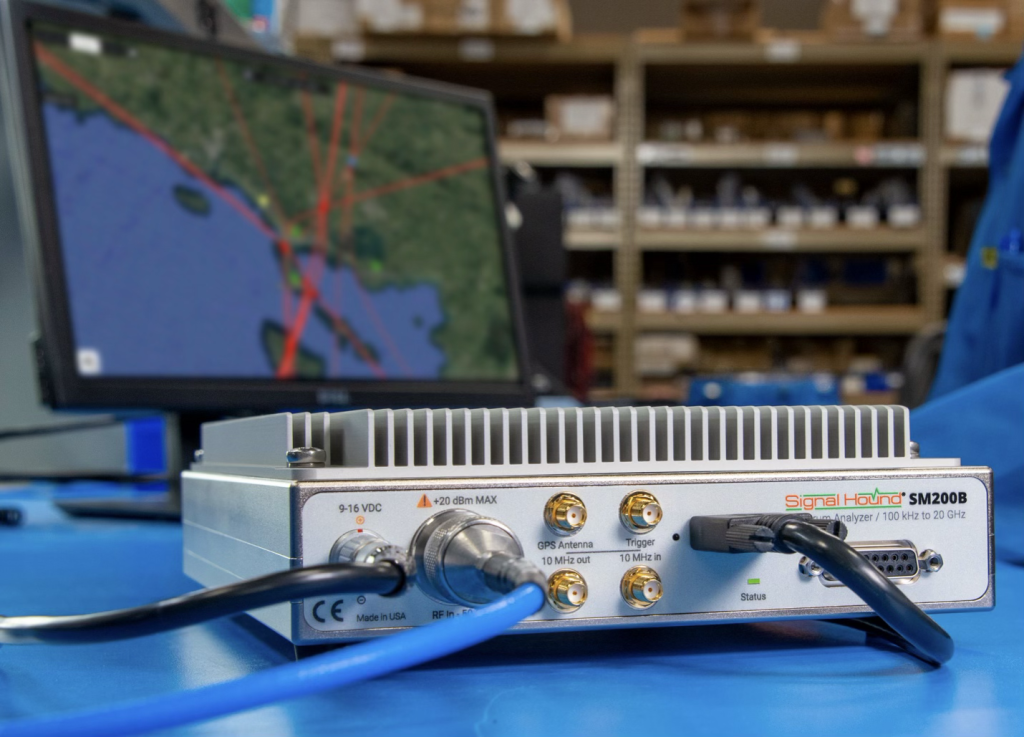
The culmination of years of engineering expertise is perhaps best represented by the SM200. This 20 GHz spectrum analyzer is a flagship product designed for high-performance applications. One of its most impressive specs is its terahertz-per-second sweep rate, combined with a fantastic dynamic range.
Justin Crooks shared a glimpse into the development of the SM200, noting that early designs were much more complex as they tested various circuits individually. Eventually, the design was streamlined into a compact, high-efficiency two-board solution. The SM200 represents the pinnacle of what can be achieved when you combine the portability of USB power with world-class RF engineering.
Key Takeaways: Why the Evolution of USB RF Tools Matters
- Portability is Power: Signal Hound proved that high-performance RF tools could be small enough to carry in a laptop bag, enabling field work that was previously impossible.
- Accessibility through Pricing: By focusing on a “price-performance leader” strategy, Signal Hound brought professional-grade tools to a wider audience, from hobbyists to high-level defense contractors.
- Real-Time Capability: The jump to 20 MHz (and later 27 MHz and beyond) of instantaneous bandwidth allowed for real-time analysis, essential for modern digital communications.
- Modular Growth: By creating tracking generators (TG series) to complement their analyzers (SA series), Signal Hound allowed users to build a full scalar network analysis suite incrementally.
Looking Toward the Future
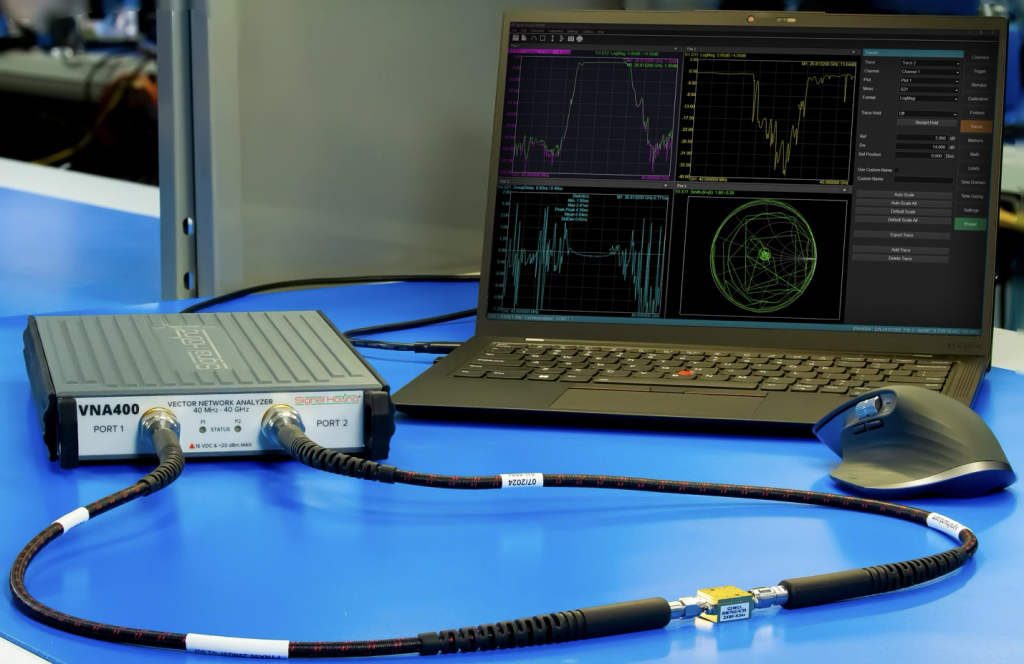
The journey from the SA44B stencil to the advanced circuitry of the SM200 is a testament to constant innovation. Today, Signal Hound continues to push boundaries with newer products like the VNA400 and the VSG200. These instruments continue the tradition of being premium, accessible, and high-performing, supporting an ever-evolving wireless world.
As RF environments become more crowded and complex, the need for tools that are both powerful and portable will only grow. Signal Hound’s history shows that they aren’t just following the industry—they are helping to define where it goes next. Whether you are testing a simple filter or analyzing a complex 20 GHz signal, the “Signal Hound way” ensures you have the tools you need without the bulk or the massive price tag.
What was your first RF tool? Do you have questions about the current lineup of Signal Hound spectrum analyzers? Let us know in the comments below, and don’t forget to follow for more insights into the world of RF engineering.
Watch the full video: https://www.youtube.com/watch?v=qvgUsfvIWUI
About the Author